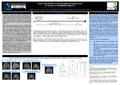
[en] In Parkinson's disease, altered activity in posterior associative cortices has often been associated with dementia. It remains to be determined if this pattern is a reliable marker of a progression toward dementia in patients without demonstratable dementia. In this retrospective analysis, we used positron emission tomography to study resting-state cerebral fluodeoxyglucose uptake in 8 healthy controls and 8 Parkinson's disease patients who did not have evidence of dementia at the time of assessment. For those patients, clinical follow up was available and we know that they did not meet dementia criteria on average 10,37 years after assessment. The results show that patients had reduced fluodeoxyglucose uptake mostly localised in the right hemisphere and including precuneus, superior temporal, middle temporal and inferior parietal cortices. It also includes right insula. These cerebral activity predominating in posterior cortices is present in non-demened patients but is not always predictive of dementia within the 10,34 years.
Research center :
GIGA CRC (Cyclotron Research Center) In vivo Imaging-Aging & Memory - ULiège
Disciplines :
Neurology
Author, co-author :
Deville, Benjamin ; Université de Liège - ULiège > Centre de recherches du cyclotron
Lemaire, Christian ; Université de Liège - ULiège > Centre de recherches du cyclotron
Degueldre, Christian ; Université de Liège - ULiège > Centre de recherches du cyclotron
Salmon, Eric ; Université de Liège - ULiège > Département des sciences cliniques > Neuroimagerie des troubles de la mémoire et révalid. cogn.
Garraux, Gaëtan ; Université de Liège - ULiège > Département des sciences cliniques > Neurologie
Language :
English
Title :
Is posterior cerebral hypometabolism always predicitve of dementia in Parkinson's disease?
Alternative titles :
[fr] L'hypométabolisme cérébral des régions postérieures est-il toujours prédictif d'une démence dans la maladie de Parkinson?
Publication date :
08 June 2010
Number of pages :
231,1 x 114,3 cm
Event name :
15th International Congres of Parkinson's disease and Movement Disorders