Pretreatments and enzymatic hydrolysis of Miscanthus x giganteus for oligosaccharides production: delignification degree and characterisation of the hydrolysis products
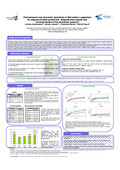
[en] The aim of the present study is to compare two delignification methods (formic/acetic acid1 and
soaking in aqueous ammonia) on Miscanthus x giganteus and to assess the suitability to produce
cellobiose and other oligosaccharides after enzymatic hydrolysis. Oligosaccharides have recently
gotten attention for their health benefits.
Two methods were compared in order to quantify lignin: the acid detergent lignin method
(procedure of Van Soest most commonly employed by animal scientist and agronomists for
analysis of forages) and the Klason lignin procedure. Lignin concentrations in raw material
determined by both methods were different; Klason lignin value (23.5%) was greater than the
acid detergent lignin concentration (12.9%). Possible reasons of these results will be discussed.
Pretreatment by the formic/acid mixture showed a better deliginification rate compared to the
soaking in aqueous ammonia method. Results were based on Klason lignin.
Analysis of the structural carbohydrates revealed that untreated miscanthus was mainly composed
of glucose and xylose.
Extracted pulps by both delignification methods were hydrolysed by commercial cellulases and
hemicellulases. A major challenge is the characterisation of complex mixtures of lignocellulosic
hydrolysates. In this study, the hydrolysis products were separated and quantified by highperformance
anion exchange chromatography with pulsed amperometric detection (HPAECPAD).
This method was successfully applied to the quantitative analysis of monosaccharides
(glucose and xylose) and disaccharides (cellobiose and xylobiose) formed by the enzymatic
hydrolysis of pretreated miscanthus. The influence of the pretreatments on the oligosaccharides
yields will be presented.
Disciplines :
Materials science & engineering
Author, co-author :
Vanderghem, Caroline ; Université de Liège - ULiège > Chimie et bio-industries > Chimie biologique industrielle
Jacquet, Nicolas ; Université de Liège - ULiège > Chimie et bio-industries > Chimie biologique industrielle
Blecker, Christophe ; Université de Liège - ULiège > Chimie et bio-industries > Technologie des industries agro-alimentaires
Paquot, Michel ; Université de Liège - ULiège > Chimie et bio-industries > Chimie biologique industrielle
Language :
English
Title :
Pretreatments and enzymatic hydrolysis of Miscanthus x giganteus for oligosaccharides production: delignification degree and characterisation of the hydrolysis products
Publication date :
04 February 2010
Event name :
COST FP0901 meeting “Current needs in Biorefinery analytics”