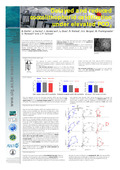
[en] Numerous experiments to date have demonstrated that elevated PCO2 is detrimental to biogenic calcification rates. However, most of these experiments have been realized in batch or continuous cultures and give little information on the dynamics of calcification in natural conditions. The present work describes the development and decay of a nutrient-induced bloom of the coccolithophorid Emiliania huxleyi in a mesocosm experiment. The monitoring of Dissolved Inorganic Carbon (DIC) and Total Alkalinity (TAlk) within the seawater enclosures allowed us to describe comprehensively day to day dynamics of both calcification and organic carbon production. Three atmospheric PCO2 conditions (glacial, present and next century) were simulated by bubbling CO2 mixtures, while total alkalinity was left to evolve from its present value. No conspicuous change of Net Community Production under elevated PCO2 was recorded while the production of inorganic carbon appeared to be affected in two ways. Firstly, the production rate of inorganic carbon appeared to be lowered by 40% in the next century PCO2 conditions, decreasing concomitantly the calcification to photosynthesis ratio from 0.75 (glacial conditions) to 0.45 (next century conditions). Secondly, the onset of calcification was delayed by 24~48h under elevated PCO2 conditions, reducing the overall length of calcification in the course of the bloom. These two effects would act to reduce the amount of precipitated CaCO3 by coccolithophorids in a High CO2 world
Delille, Bruno ; Université de Liège - ULiège > Département d'astrophys., géophysique et océanographie (AGO) > Océanographie chimique
Harlay, Jérôme ; Université de Liège - ULiège > Département d'astrophys., géophysique et océanographie (AGO) > Océanographie chimique
Zondervan, Ingrid; Leibniz Institut für Meereswissenschaften, Universität Kiel
Chou, Lei; Laboratoire d’Océanographie Chimique et Géochimie des Eaux, Faculté des Sciences, Université Libre de Bruxelles, B-1050 Brussels, Belgium
Wollast, Roland; Laboratoire d’Océanographie Chimique et Géochimie des Eaux, Faculté des Sciences, Université Libre de Bruxelles, B-1050 Brussels, Belgium
Borges, Alberto ; Université de Liège - ULiège > Département d'astrophys., géophysique et océanographie (AGO) > Océanographie chimique