Reference : Nocturnal vertical migrations by amphipods of the Posidonia oceanica (L.) Delile foliar ...
Scientific congresses and symposiums : Poster
Life sciences : Environmental sciences & ecology Life sciences : Aquatic sciences & oceanology
http://hdl.handle.net/2268/6002
Nocturnal vertical migrations by amphipods of the Posidonia oceanica (L.) Delile foliar stratum : Importance of the litter cover
English
Michel, Loïc[Université de Liège - ULg > Département des sciences et gestion de l'environnement > Systématique et diversité animale >]
Sturaro, Nicolas[Université de Liège - ULg > Département des sciences et gestion de l'environnement > Océanologie >]
Lepoint, Gilles[Université de Liège - ULg > Département des sciences et gestion de l'environnement > Océanologie >]
Gobert, Sylvie[Université de Liège - ULg > Département des sciences et gestion de l'environnement > Océanologie >]
Dauby, Patrick[Université de Liège - ULg > Département des sciences et gestion de l'environnement > Systématique et diversité animale >]
Nov-2007
A0
No
International
14th Benelux Congress of Zoology
01/11/2007-02/11/2007
Vrije Universiteit Amsterdam
Amsterdam
Pays-Bas
[en] Amphipods ; Posidonia ; Community dynamics
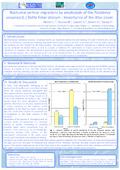
[en] In seagrass meadows, several groups of vagile invertebrates are well known to perform a nocturnal rise from the lower layers of the meadow to the foliar stratum. This vertical migration is generally regarded as a defense mechanism against predation by diurnal fishes, as well as a mean to maximize the exploitation of trophic resources offered by the meadow. Here, we focused on the amphipods from a Mediterranean Posidonia oceanica meadow. We sampled the community present in the meadows of Calvi Bay (NW Corsica) using two different techniques (hand-towed net and litter collecting). Samples were taken at two seasons, during both night and daytime. Our results confirm the nocturnal rise to the foliar stratum. Combined to an analysis of the recent literature, they also tend to show that amphipods spend the daytime not in the matte itself, as it has been proposed in the past, but in the thin layer of Posidonia litter present at the interface between the foliar stratum and the root/rhizome system. This would emphasize the role of the litter cover in the complexity of the habitat within the meadow, and therefore in the vagile invertebrate community structure and the functioning of the whole meadow as an ecosystem.
Fonds de la Recherche Scientifique (Communauté française de Belgique) - F.R.S.-FNRS